
How Junior Golf Tournaments Work
Junior golf tournaments are where your child starts learning how golf works beyond lessons, range sessions and casual rounds. They learn how to keep score, play with other junior golfers, follow competition rules, handle nerves and finish a round without someone guiding every decision.
The sign-up process is usually simple, but a few small details can decide whether the event is a good fit for your child. Each tournament has its own age groups, costs, handicap rules, caddie policy, closing date and playing format. A relaxed 9-hole development event is very different from an 18-hole regional or national tournament, so it helps to know exactly what you are entering before you fill in the form.
This guide walks you through how junior golf tournaments usually work, how to sign up, and what to check before you enter your child.
What is a junior golf tournament?
A junior golf tournament is an organised golf event for children or teenagers. It can be a relaxed academy day, a club competition, a 9-hole development event, an 18-hole regional tournament or a stronger national event.
Some tournaments are mainly about experience. Others are more competitive and may count towards rankings, handicaps or selection records. Start by working out what kind of event it is, and whether it matches where your child is right now.
A child who is still learning how to play on a course does not need to start in the strongest field. Beginner events, academy competitions and club junior days are often a better first step. Once your child is more comfortable with scoring, rules and pace of play, regional events become a more natural next move.
The different levels of junior tournaments
Most junior golf events fall into a few broad levels. Each step asks a little more of the player, from relaxed first events through to stronger competitive fields.
Beginner and development events
Usually shorter and more relaxed. These may be played over 6 holes, 9 holes or from shorter tees.
Best for: learning how tournaments work, not chasing rankings.
Club and academy events
A useful stepping stone. Your child gets used to tee times, scorecards, playing partners and competition routines in a familiar environment.
Best for: building confidence before more formal events.
Regional junior tournaments
More formal events. In the Western Cape, these can include events linked to bodies such as Western Province Golf and Boland Golf.
Best for: rules, proper scoring and managing a full round independently.
National or stronger-field events
For juniors with a lot of tournament experience. These events often have stricter entry requirements, stronger fields and more pressure around scoring.
Best for: competing in tougher fields with higher expectations.
Your child does not need to rush through these levels. Junior golf is easier to build when each step feels challenging but still realistic.
Quick checks before you sign up
Before signing up for a junior golf event, it helps to check a few basics so you know the event is the right fit for your child.
These checks can save you from entering the wrong event or arriving on the day with the wrong expectations.
What is the level of the tournament?
Is this event beginner-friendly or competitive? It helps you choose the right level.
Does my child need a handicap?
Some events require one, some do not.
Is the event 9 holes or 18 holes?
This matters for younger players.
Which age group or division applies?
Events may group players by age, handicap or ability.
Does the event count towards rankings?
Some events matter more for competitive pathways.
Is caddying allowed?
Rules differ from event to event.
What is the total cost?
Entry fees, travel, food and practice rounds can add up.
How to know if your child is ready
Your child does not need a perfect swing or a low handicap before entering a tournament. Tournament golf is part of how they learn.
A better question is whether they can manage the basics. Can your child play the required number of holes, count their own shots honestly, keep moving, follow simple instructions and recover after a bad hole?
That last part is often the real test. Tournament golf can be slow, frustrating and unpredictable. A child who can finish the round properly, even after a difficult hole, is already learning one of golf’s most important skills.
If your child still needs help on almost every shot, a relaxed development event or academy competition may be the better starting point. If they can play more independently, an 18-hole event may be suitable.
Finding junior golf tournaments
The easiest way to find junior tournaments is to follow the organisations and clubs that run events in your area. Golf coaches are often a good first point of contact because they usually know which events suit different levels of player.
You can also check club notices, academy updates, WhatsApp groups, regional golf fixture lists and junior golf calendars. In the Western Cape, families often look at events from Western Province Golf, Boland Golf, SA Kids Golf, U.S. Kids Golf, GolfRSA-linked fixtures and local club competitions.
The Junior Tee tournament calendar is also there to help you find upcoming junior golf events in one place.
Entry spaces can fill up, and some events close before the advertised date if the field is full. It is worth checking fixtures regularly instead of waiting until the week before.
How to enter a junior golf event
Most entries follow the same basic pattern. Read carefully, check that your child qualifies, submit the correct details, and wait for confirmation before assuming the entry is final.

Read the tournament information carefully
Look for the date, venue, age groups, format, number of holes, entry fee, handicap requirement and closing date. The most important details are not always in the headline, so read the full notice before entering.

Complete the entry form
You may be asked for your child’s name, date of birth, home club, handicap details, HNA or player number, your contact details and proof of payment.

Make the payment
Most tournaments require payment when you enter. Others only ask for payment once your child has been accepted into the field. Always keep proof of payment until the entry has been confirmed.

Wait for confirmation
An entry form does not always mean your child is officially in the field. The organiser may still need to check eligibility, field size or payment. Only when you receive confirmation a few days before the tournament, a spot is guaranteed.
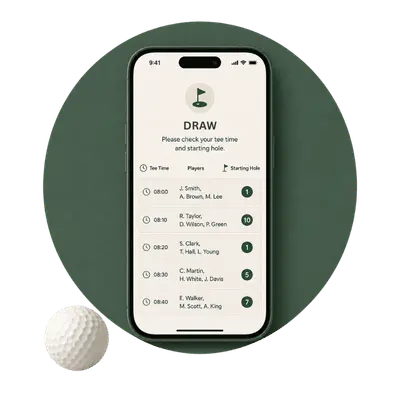
Check the draw before the event
Closer to the event, the draw is released. This will show your child’s tee time, playing partners and sometimes the starting hole. Check it carefully so you can plan accordingly.
What happens on tournament day?
Tournament day usually starts well before the first tee shot. Your child needs time to arrive, check in, warm up, use the bathroom, fill a water bottle and get to the tee without rushing.
A good rule is to arrive early enough that the morning feels calm. For many events, 45 to 60 minutes before the tee time is sensible. That gives your child time to settle, roll a few putts and listen to any instructions from the organiser or starter.
Once the round begins, your child needs to play the ball, count the score, follow the rules and keep up with the group. If caddies are allowed, your role may include helping with golf clubs, distances and calm decision-making. If caddies are not allowed, your child needs to manage the round more independently.
After the round, the scorecard usually needs to be checked, signed and submitted. This is an important part of tournament golf. A scorecard mistake can create unnecessary trouble, even after a good round.
What your child should take
A tournament bag does not need to look like a professional tour setup, but it should be practical.
Your child should have enough golf balls, tees, a marker, a glove, a towel, water, snacks, sunscreen, a cap or hat and weather-appropriate clothing. A rain jacket is worth packing even when the weather looks fine, because golf days have a way of changing their mind.
Younger players usually need help packing their golf gear at first. Over time, it is good for them to learn what belongs in their own junior golf bag. That responsibility is part of becoming a more independent golfer.
Your role during the tournament
Your role depends on the event rules. If caddies are allowed, you may be able to help with clubs, distances, encouragement and basic decisions. If caddies are not allowed, your job is to step back and let your child play.
That can be harder than it sounds, especially when you can see the wrong club coming out of the bag or a rushed putt about to happen. But tournament golf is where children start learning to think for themselves.
Try to stay calm, respect the organiser’s rules and avoid coaching from the side. Support your child without taking over, and let them solve small problems on the course where possible.
Junior golf is a long road. One bad hole, one bad round or one tough tournament is not the full story.
What if your child has a bad tournament?
Bad tournaments are part of golf. Every junior will have rounds where nothing works, putts do not drop, penalties happen and the score is higher than expected.
That does not mean the tournament was wasted.
A difficult round can teach your child how to recover, how to finish properly, how to manage frustration and how to keep playing honestly when the score is no longer exciting.
After the round, keep the conversation simple. Ask what went well, what was difficult and what they would try differently next time. The full technical breakdown can wait for the coach.
When to move to stronger tournaments
There is no perfect timeline for moving into stronger events. Some children are ready quickly. Others need more time in academy events, club competitions or 9-hole formats.
Your child may be ready for the next level when they can complete the required number of holes comfortably, keep score honestly, understand common rules, handle pressure better and play without relying too heavily on adult help.
Some events count towards rankings or order of merit systems. Others are simply there to give children more tournament experience. As your child becomes more competitive, this is worth checking before you enter.
Moving up too quickly can make tournament golf feel unnecessarily hard. Staying too long in easy events can also hold back progress. The best path is usually gradual: play, learn, adjust and then step up when the time is right.
Final word
Junior golf tournaments are not only about scores, medals and rankings. They teach your child how to compete, think independently, respect the game and handle the strange little dramas that golf always brings.
The sign-up process becomes much easier once you know what to check. Look at the age group, handicap requirement, format, cost, closing date, caddie rules and tournament level before you enter.
Start with events that suit your child’s current stage. Then build from there, one round at a time.